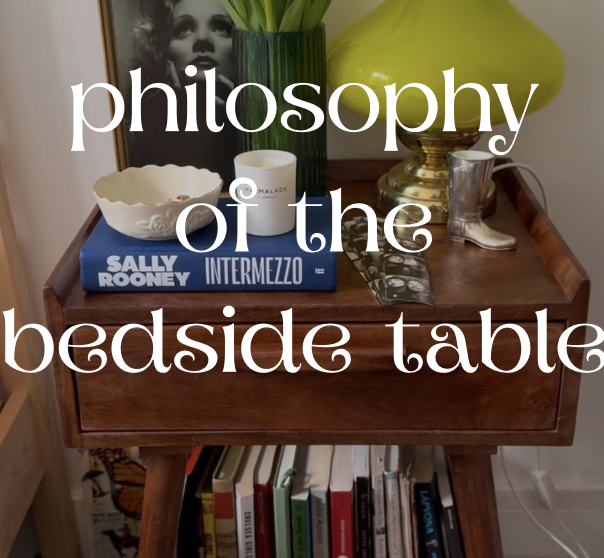
A wise woman once said, “You don’t have to love me, you don’t even have to like me, but you will respect me.”
In a world obsessed with social performance, forced politeness, and keeping everyone happy, there is a quiet, radical power in accepting that you might just be unlikeable to most people, and being completely fine with it.
We often confuse performative friendliness with genuine kindness. When you stop putting on a social mask just to make strangers comfortable, your true emotions actually start to mean something. A smile shouldn’t be an automatic reaction to appease a room; it should mean you are genuinely happy or excited. People always know where they stand with someone who refuses to fake it, preferring clear truth over comfortable deception.
Trying to please everyone usually forces you into neutrality, but neutrality is a trap. A person with real conviction is respected when they are a genuine friend and a genuine enemy. Being polarizing simply means you stand for something. Neutrality, on the other hand, leaves you passionless, easily swayed, and living strictly on the surface level of life.
When you stop worrying about whether the world likes you, you reclaim a massive amount of mental energy. You stop wasting time reading into every small interaction or managing other people’s perceptions, and you can finally direct that focus toward your real goals, your creative pursuits, and deeply caring for the small circle of people who truly matter to you.
This doesn’t mean closing yourself off behind an iron gate forever. There is always value in occasionally stepping out of your own head when it genuinely serves or helps someone else. But at your core, protecting your peace and holding fast to your own integrity will always take you further than trying to be everyone’s favorite person.
We live in a culture obsessed with staying relevant. We feel a relentless, almost anxiety inducing pull to track the latest viral discourse, weigh in on hot takes within minutes, and consume recycled opinions before we have even had the time to sit down and process our own. The modern internet demands constant availability, rapid reaction times, and an appetite for whatever trend is burning brightest this second. But what if the best thing you could possibly do for your creative work, your mind, and your sense of identity is to become completely, intentionally out of touch?
In a world addicted to algorithmic speed, the act of turning your back on the internet’s endless churn is not an admission of ignorance, it is a act of creative self-preservation. When you look closely at how content is generated today, much of it is merely a copy of a copy: a reaction to someone else’s commentary on a trend that was already digested by five other creators before them. We end up using the same buzzwords, echoing the same surface-level takes, and regurgitating opinions we never actually earned through our own critical thinking. When you constantly consume second-hand interpretations, your personal artistic perspective inevitably degrades. To build a voice that actually carries weight, you have to go directly to the primary source. Read the foundational text yourself instead of settling for a sixty-second summary video. Study history, philosophy, and art directly rather than scrolling through endless mood boards designed by someone else. Form your own unfiltered thoughts in total quiet before checking what a comment section thinks you ought to feel.
This relentless pace has also completely fractured our relationship with time. On the internet, two weeks feels like two dinosaur epochs; trends flare up, cause mass outrage or fascination, and die before we can even begin to comprehend their deeper implications. This artificial urgency forces creators into a state of panic, pushing half-baked, frantic ideas into the world just to catch a passing algorithmic wave. But real art, good writing, and truly original ideas demand incubation. The legendary abstract painter Agnes Martin famously described sitting in a chair for hours, waiting in absolute stillness for an idea to reveal itself to her, she painted, quite literally, with her back to the world. When you detach yourself from online timelines, you give your ideas permission to breathe. You allow yourself to linger on a single book or concept for months if it moves you, to let your draft sit until it matures, and to replace the frantic rush of instant publishing with the slow, satisfying labor of genuine craft.
Ultimately, true originality does not come from surveying the market or taking the temperature of the culture; it comes from looking inward. When you turn down the volume of external noise, you finally give yourself the space to confront your own reflection, your personal history, your memories, and the unique web of influences that shaped you. This is how you cultivate a personal mythology. Cliche behavior is almost always the result of someone failing to access their own internal complexity, choosing instead to paste other people’s symbols over their own identity.
You are far too complex to settle for being an echo. Being out of touch is not about hiding from the world, it is about choosing depth over velocity, stepping off the treadmill of constant consumption, and allowing your own quiet, singular voice to finally lead the way- your way.
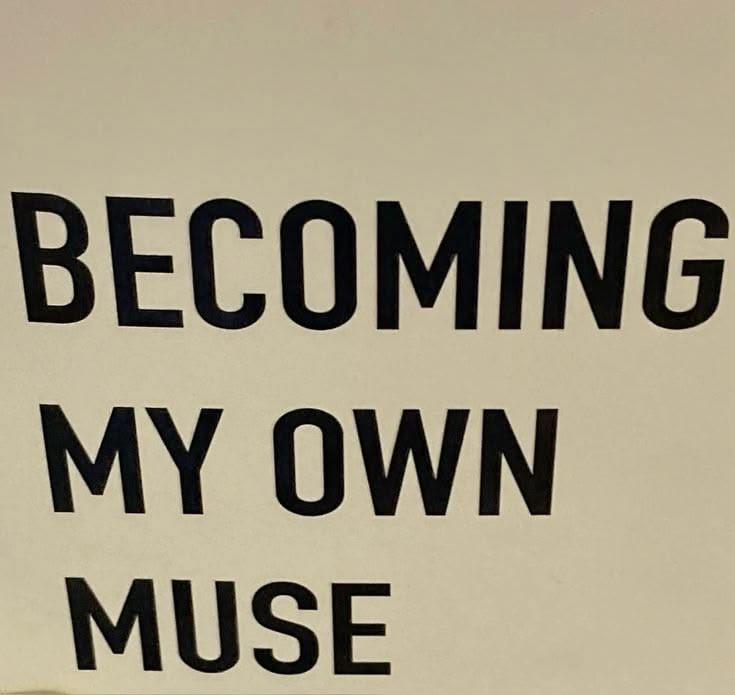
Throughout history, the role of the “muse” has almost always been viewed as an external entity. We are captivated by the classic duo: the brilliant creator and their elusive, ethereal inspiration. But this dynamic carries a quiet, historical weight, particularly when the muse is female. Too often, women positioned as muses have been stripped of their own creative agency, intellectual complexity, and intrinsic potential, acting merely as blank canvases for someone else’s genius.
Consider Lou Andreas-Salomé. History frequently minimizes her as the brilliant muse who captivated Friedrich Nietzsche, Rainer Maria Rilke, and Sigmund Freud. Her own prolific body of philosophical work, psychoanalytic theories, and literature remains largely overshadowed by the sensationalism of her personal relationships. Yet, Salomé fiercely rejected the title of a muse. She refused any form of subordination, choosing instead to seek creative fulfillment deep within herself.
It was Salomé who fundamentally reshaped how we understand the journey inward by challenging one of psychology’s oldest villains: Narcissus.
In standard psychology and classical psychoanalysis, narcissism is treated as a fatal flaw, an inability to distinguish oneself from the surrounding world, or a tyrannical, toxic demand for external worship. The myth tells us that Narcissus caught sight of his reflection in a pool of water, fell hopelessly in love with his own image, and ultimately drowned.
Salomé saw something entirely different hidden beneath the surface of that pool.
She proposed that Narcissus’s fixation wasn’t just a regression into fatal self-obsession; it was a dual-oriented state. To Salomé, looking into the water is a deep entry into the self. What Narcissus sees isn’t superficial vanity; he recognizes a fragment of unconscious memory—a lost, unified part of his being.
By engaging with his reflection, Narcissus bridges the gap between the creator and the created. He becomes both the artist and the muse, using self-exploration to access his highest creative potential. This is what Salomé coined as the creative narcissist—the individual who gives birth to themselves.
“The narcissistic way is internal, deeply linked to a feminine archetype of self-containment and inner knowing, much like Venus holding her mirror.”
To understand this journey back to ourselves, we have to look closely at the body of water Narcissus gazes into. In mythology, standing water represents the unconscious mind.
Consider Mnemosyne, the Greek goddess of memory and the mother of the nine muses. Her mythological opposite is Lethe, the goddess of forgetting, who is symbolized by a moving, rushing river. To forget is to be in constant, restless motion, which is why it is represented by the river. To create, however, requires us to stand completely still and contemplate, much like the stillness of a lake.
Without memory and stillness, art cannot exist. When we plunge beneath the surface of our own self-reflection, we are not chasing vanity…we are thirsting for memory. As Albert Camus beautifully hinted in his essays, all human endeavor is ultimately an act of remembering.
When you do the difficult work of figuring out who you are, it often feels less like discovering a stranger and more like coming home to a completed version of yourself that existed long before the noise of the world took over.
The Peril and the Promise
Being your own muse is not a superficial lifestyle trend. In a modern culture increasingly driven by surface-level self-expression, where self-care is occasionally minimized to viral aesthetics or bailing on responsibilities, Salomé’s deeper invitation is highly challenging.
Turning fully inward carries genuine risks. There is the immediate risk of vanity, where one stays entirely on the surface of the water, failing to look deeper than the outer shell. Then there is the risk of the deep, where a person goes so far into the depths of their own psyche that they isolate themselves from the world, or encounter internal shadows they are not prepared to face. Rilke famously walked this line, describing his inner muse as an angel that threatened to destroy him.
Yet, it is a risk entirely worth taking. To be your own muse means building the strength to hold your own hand as you navigate the depths of who you are. The inner whispers of intuition we spend our lives searching for in other people don’t originate from someone else’s mouth. They are coming from you.
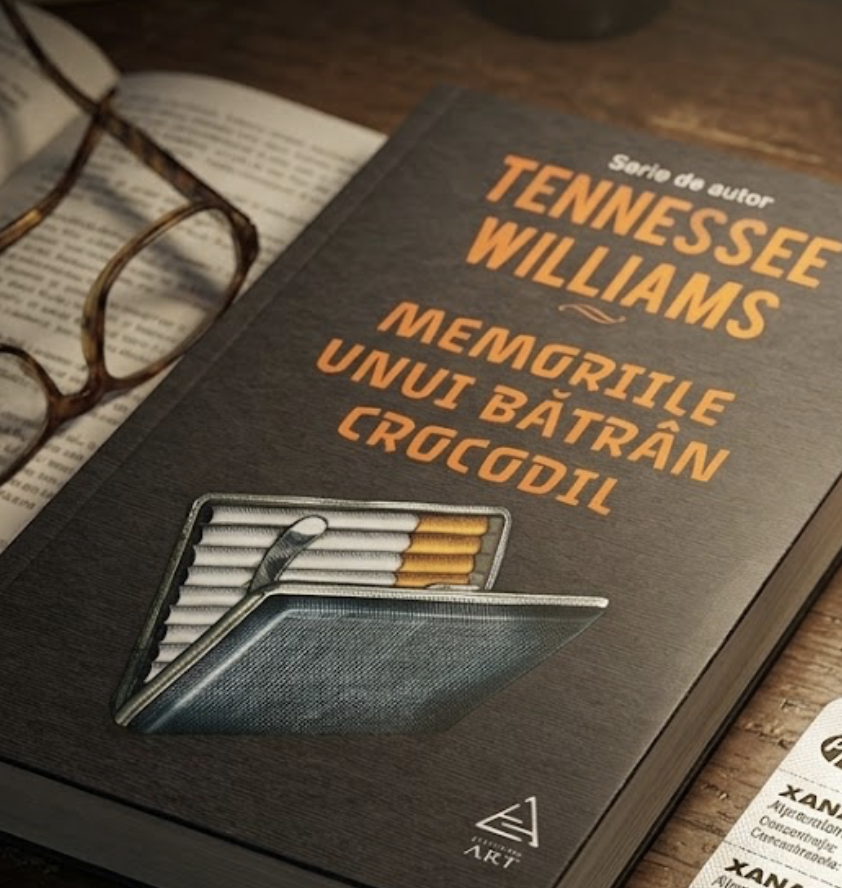
Există o fragilitate atât de mare în a fi uman, încât uneori simplul act de a respira devine un efort prea greu. Când anxietatea nu mai este doar un fundal sonor, ci devine zgomotul principal din mintea ta, cauți cu disperare un buton de mute. Pentru mine, acel buton a fost Xanax-ul. O barieră chimică perfectă între mine și o lume care se simțea mult prea intensă, mult prea zgomotoasă, mult prea dură.
Recent, recitind fragmente din confesiunile și eseurile lui Tennessee Williams – adunate adesea sub metafora obsedantă a „memoriilor unui crocodil bătrân” – am simțit o lovitură direct în stomac. Williams, unul dintre cei mai mari empatici ai literaturii, un om care a tradus vulnerabilitatea umană în capodopere, a trăit decenii întregi închis în propria sa „carapace chimică”. El descria cum amfetaminele și sedativele i-au oferit acea piele groasă, de crocodil, capabilă să îndure critici, eșecuri și propria sensibilitate exacerbată.
Citindu-l, m-am privit în oglindă și am înțeles, poate pentru prima dată, ce mi-a făcut mie dependența de benzodiazepine.
La început, Xanax-ul nu se simte ca un inamic. Se simte ca un salvator. Îți oferă exact ceea ce promite piesa lui Williams: o piele de crocodil. Devii imun la panică, imun la frică, imun la durere. Lumea exterioară își pierde colțurile ascuțite. Devii un observator detașat al propriei tale vieți, privind totul din spatele unui geam securizat.
Dar capcana pe care Tennessee Williams o descrie atât de dureros în scrierile sale târzii este că această armură nu selectează ce anume lasă să treacă prin ea. Când îți construiești o piele groasă ca să nu mai simți durerea, încetezi să mai simți și bucuria. Încetezi să mai simți conexiunea autentică, entuziasmul, nuanțele realității.
„Un crocodil devine bătrân nu doar pentru că trec anii peste el, ci pentru că încetează să mai simtă apa în care înoată.”
Xanax-ul m-a transformat, treptat, într-un astfel de personaj nescris al lui Williams. Eram acolo, dar nu pe deplin prezentă. Gestionam logistica vieții, dar pierdusem poezia ei. Dependența de benzodiazepine îți fură tocmai esența care te face să creezi, să iubești, să fii: îți fură vulnerabilitatea.
Trezirea din amorțeală
Marea tragedie a lui Williams a fost că, spre sfârșitul vieții, izolarea sa chimică devenise o închisoare din care evadarea părea aproape imposibilă. Însă lectura textelor sale nu trebuie să fie o sentință, ci un avertisment.
Să recunoști că ai o dependență de Xanax este ca și cum ai încerca să îți dai jos o piele care a crescut peste tine. Doare. Fiecare miligram în minus înseamnă o revenire a realității în culori mult prea stridente. Anxietatea se întoarce la început ca un val violent, amintindu-ți de ce ai fugit în primul rând.
Dar, spre deosebire de monștrii din apele stătătoare ale lui Williams, eu am ales să nu rămân blocată în acea armură de sticlă. Acest articol nu este despre rușine, ci despre recuperarea propriei sensibilități. Să fii vulnerabil, să simți frica și totuși să mergi mai departe fără o cârjă chimică este, în final, singurul act de curaj adevărat.
Nu am nevoie de o piele de crocodil ca să supraviețuiesc lumii. Am nevoie doar de curajul de a o simți exact așa cum este: crudă, intensă și, în sfârșit, reală.
Sper ca acest text să rezoneze cu ceea ce ai simțit citindu-l pe Williams și cu propria ta călătorie.
I wish I could write about my life with the effortless grace of my friend Andra. But looking back, I’m not even sure I’ve done anything notable or worthy of being written down until now.
For as long as I can remember, my life was dictated by a single, heavy mission: pleasing my father. Every single hobby I ever loved was meticulously transformed by him into a chore, a crushing obligation. It took breaking down to finally reach a definitive conclusion: I absolutely hate it when people tell me what to do. The moment something enjoyable becomes a demand, it completely loses its value to me.
I still know how to play the guitar, how to draw, and how to sing, but I’ve never truly excelled or achieved high performance in any of them. Maybe only in Romanian class, if I’m being honest. And perhaps that’s why I am back to writing now, sitting here.
Obregia Hospital is a wonderful place for rest. I have friends here. Against all odds, I feel safe.
Part 2: The Fog and The Voices
Time blurs in here. The calendar says one thing, but my mind is living on its own timeline.
Some days are marked by a heavy, immovable exhaustion. When Aurelia and Alexandra left the ward, a wave of loneliness hit. I told myself I was feeling better, relatively speaking, but the truth is, there are moments where I feel too lazy to even breathe.
Then come the better nights. The first nights where I don’t wake up in the pitch black, gasping for air. I miss Alexandra. Dumi has been a total sweetheart through all of this—he gave me a new pen that actually writes beautifully, thank God. We should be happy. We really should.
But then the fog rolls back in.
I don’t know what’s happening to my brain. At night, just before I fall asleep, I hear voices. It’s strange. No, “bizarre” is a more appropriate word, I think.
My dreams are plagued by strange, unsettling images of my mother and father. I wake up asking myself: Why? Why now?
Part 3: A Scream on Paper
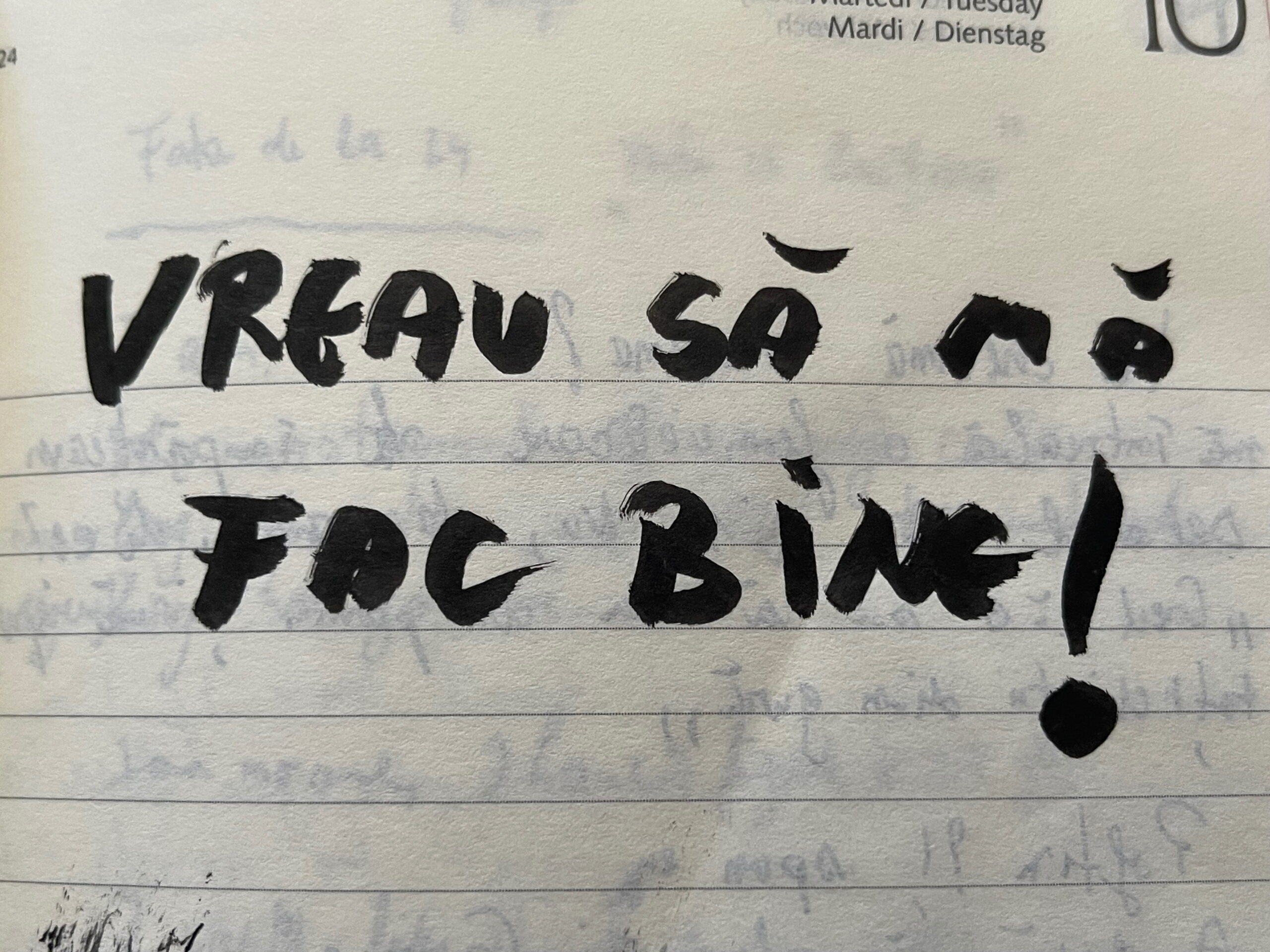
There are moments when the desperation leaks right through your skin. I found myself staring at a blank page and writing a single, definitive truth in bold, jagged letters:
I WANT TO GET WELL!
My mascara smeared across the page, stained with tears. But even in the darkness, Dumi remains a sweetheart, a anchor keeping me tethered to the real world.
The environment here is unpredictable, a surreal theater of human pain. Just the other day, a fairly imposing woman walked up to me in the middle of the dayroom. “Is your name Suzana?” she demanded. I looked at her, trying to keep my composure. “No. It’s Morgana. Why?” She glared at me. “Because if it was, I think I’d punch you and smash all the teeth right out of your mouth.”“Pardon?!” I stammered. She just shrugged. “Ah. Only if your name was Suzana.” And she walked away.
You have to learn to just walk away here. You have to find your own space.
Part 4: Facing the Shadow
As the days bled into one another, something shifted inside me. I stopped writing in Romanian and began thinking, processing, and writing entirely in English. It was as if switching languages gave me the emotional distance I needed to look at my own reflection clearly.
I found myself watching The Flash on the hospital TV, and a flood of childhood memories came rushing back, contrasting sharply with this questionable situation. I am in a mental hospital, and yet, I still don’t know if I’m “crazy” or not. How crazy do you actually have to be to be considered a danger to society and to yourself?
Strangely, there is a twisted kind of comfort here. I realized that the worst parts of yourself come crawling out only when you finally start to understand everything that you truly are. For a long time, I felt like I was no one. I hadn’t figured it out yet. I just wanted to be clear. To be aware.
I am where the earth breathes…
Part 5: The Gift of Healing
Looking around the ward, I saw my own private battles reflected in everyone else, just amplified. I saw people fighting Anorexia, severe OCD, and Borderline Personality Disorder. It compelled me, watching the human mind fracture. Depression, though, seems to be the universal language here, the most common diagnosis bringing people through these doors.
But this place gave me something beautiful: Alexandra, Aurelia, Eli, Rebeca, and Miruna. These women became true friends. They helped me understand myself, and in turn, understand others.
This journal exists because I can finally admit that I am a changed woman after this experience. Of course, I know reality is waiting outside. My struggles with Xanax might rise again; the road isn’t suddenly flat. But right now, in this exact moment, I feel better than I can ever remember using the word “better.”
Part 6: Departure
Today is my last day.
I want to thank all of the people here for their endless patience and radical kindness. It is a profound irony that the gentleness I found inside these hospital walls is so hardly found in regular society, even in high-class universities, in my experience.
This place turned out to be like a strange summer camp. A place where you don’t really know anyone… until suddenly, you do. I’m leaving pieces of myself behind, but I am walking out whole.