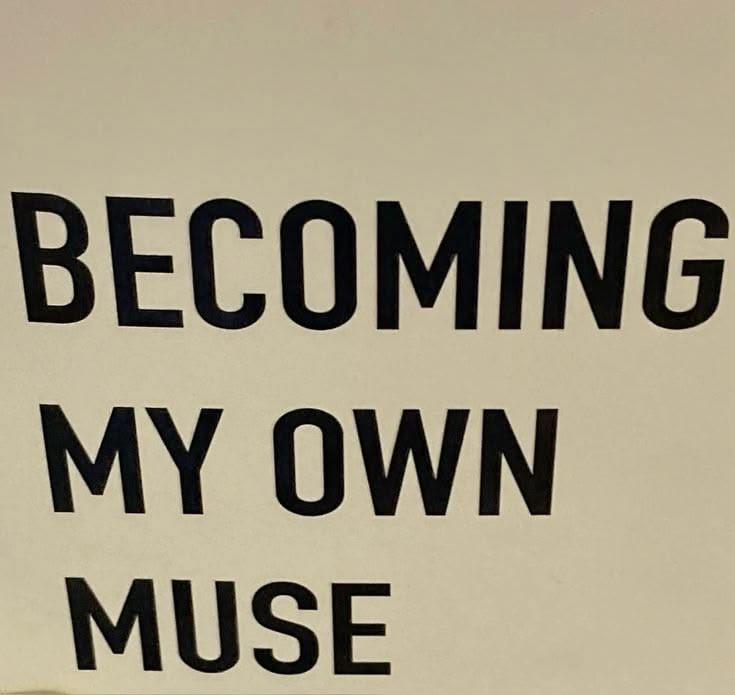
Throughout history, the role of the “muse” has almost always been viewed as an external entity. We are captivated by the classic duo: the brilliant creator and their elusive, ethereal inspiration. But this dynamic carries a quiet, historical weight, particularly when the muse is female. Too often, women positioned as muses have been stripped of their own creative agency, intellectual complexity, and intrinsic potential, acting merely as blank canvases for someone else’s genius.
Consider Lou Andreas-Salomé. History frequently minimizes her as the brilliant muse who captivated Friedrich Nietzsche, Rainer Maria Rilke, and Sigmund Freud. Her own prolific body of philosophical work, psychoanalytic theories, and literature remains largely overshadowed by the sensationalism of her personal relationships. Yet, Salomé fiercely rejected the title of a muse. She refused any form of subordination, choosing instead to seek creative fulfillment deep within herself.
It was Salomé who fundamentally reshaped how we understand the journey inward by challenging one of psychology’s oldest villains: Narcissus.
In standard psychology and classical psychoanalysis, narcissism is treated as a fatal flaw, an inability to distinguish oneself from the surrounding world, or a tyrannical, toxic demand for external worship. The myth tells us that Narcissus caught sight of his reflection in a pool of water, fell hopelessly in love with his own image, and ultimately drowned.
Salomé saw something entirely different hidden beneath the surface of that pool.
She proposed that Narcissus’s fixation wasn’t just a regression into fatal self-obsession; it was a dual-oriented state. To Salomé, looking into the water is a deep entry into the self. What Narcissus sees isn’t superficial vanity; he recognizes a fragment of unconscious memory—a lost, unified part of his being.
By engaging with his reflection, Narcissus bridges the gap between the creator and the created. He becomes both the artist and the muse, using self-exploration to access his highest creative potential. This is what Salomé coined as the creative narcissist—the individual who gives birth to themselves.
“The narcissistic way is internal, deeply linked to a feminine archetype of self-containment and inner knowing, much like Venus holding her mirror.”
To understand this journey back to ourselves, we have to look closely at the body of water Narcissus gazes into. In mythology, standing water represents the unconscious mind.
Consider Mnemosyne, the Greek goddess of memory and the mother of the nine muses. Her mythological opposite is Lethe, the goddess of forgetting, who is symbolized by a moving, rushing river. To forget is to be in constant, restless motion, which is why it is represented by the river. To create, however, requires us to stand completely still and contemplate, much like the stillness of a lake.
Without memory and stillness, art cannot exist. When we plunge beneath the surface of our own self-reflection, we are not chasing vanity…we are thirsting for memory. As Albert Camus beautifully hinted in his essays, all human endeavor is ultimately an act of remembering.
When you do the difficult work of figuring out who you are, it often feels less like discovering a stranger and more like coming home to a completed version of yourself that existed long before the noise of the world took over.
The Peril and the Promise
Being your own muse is not a superficial lifestyle trend. In a modern culture increasingly driven by surface-level self-expression, where self-care is occasionally minimized to viral aesthetics or bailing on responsibilities, Salomé’s deeper invitation is highly challenging.
Turning fully inward carries genuine risks. There is the immediate risk of vanity, where one stays entirely on the surface of the water, failing to look deeper than the outer shell. Then there is the risk of the deep, where a person goes so far into the depths of their own psyche that they isolate themselves from the world, or encounter internal shadows they are not prepared to face. Rilke famously walked this line, describing his inner muse as an angel that threatened to destroy him.
Yet, it is a risk entirely worth taking. To be your own muse means building the strength to hold your own hand as you navigate the depths of who you are. The inner whispers of intuition we spend our lives searching for in other people don’t originate from someone else’s mouth. They are coming from you.
Leave a Reply