Great literature does far more than entertain. At its best, a book acts as an active catalyst, shifting how we perceive ourselves, our relationships, and the aesthetic realm surrounding us. Certain works carve out a permanent home in our consciousness, serving as foundational pillars for personal growth and an artistic worldview.
Exploring a diverse blend of fiction and non-fiction reveals how deeply literature shapes the human spirit. From poetic explorations of personal identity to provocative critiques of Western art, books offer a gateway toward understanding life’s most intriguing mysteries.
Finding Individualism Through Fiction
The journey of self-discovery often begins within the pages of storytelling. Narrative fiction gives readers a mirror through which they can process their own search for autonomy.
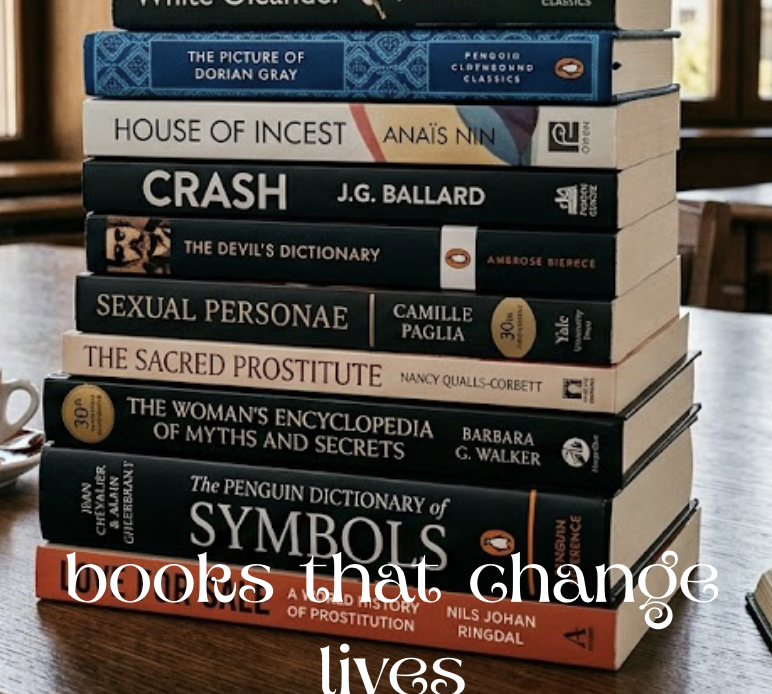
In Janet Fitch’s celebrated novel White Oleander, readers follow a young woman navigating a sequence of foster homes across Los Angeles. Through vivid, dreamy prose, the narrative transforms a story of personal survival into an homage to beauty, art, and individualism. It demonstrates how aesthetic sensitivity and artistic expression can preserve one’s agency amidst challenging circumstances.
In a dramatically different tone, Oscar Wilde’s classic The Picture of Dorian Gray functions as an ultimate manifesto for aestheticism. Wilde examines the ruthless, unyielding pursuit of external perfection, offering both an alluring celebration of art and a cautionary tale regarding moral detachment. The detailed cataloging of exquisite objects, gemstones, and ceremonial textiles within the novel highlights a profound fascination with physical form and sensory experience.
For those drawn to modern surrealism and technological critiques, J.G. Ballard’s novel Crash provides a startling vision of contemporary existence. Ballard uses extreme metaphorical narrative choices to construct a warning against the cold, hyper-technological environment of modern culture. His singular voice invites readers to reflect on how societal shifts alter raw human emotion and desire.
Decoding the Sacred, the Symbolic, and the Feminine
Beyond narrative fiction, deep analytical texts expand our awareness of human history, psychology, and mythology. Non-fiction works often unlock hidden dimensions of the psyche and illuminate historical truths that have been obscured over time.
Camille Paglia’s ambitious survey Sexual Personae dives straight into Western art and literature, analyzing the tension between orderly intellect and raw natural force. Her cutthroat analysis invites readers to engage directly with foundational critical theory, encouraging independent interpretation of cultural history rather than relying on second-hand commentary.
Psychological depth is further illuminated in Nancy Qualls-Corbett’s The Sacred Prostitute: Eternal Aspect of the Feminine. Drawing on Jungian principles, this work explores internal feminine dynamics, cyclical balance, and self-alignment. It offers a thoughtful psychological framework for understanding sacred aspects of sensuality and personal integration.
Historical and symbolic research provides yet another angle for self-enrichment. Barbara Walker’s The Woman’s Encyclopedia of Myths and Secrets uncovers pagan traditions, ancient rites, and linguistic evolutions, highlighting how cultural perspectives on the feminine have transformed through time. Meanwhile, The Penguin Dictionary of Symbols acts as a fascinating field guide to everyday life, revealing the sentimental and mythic meanings woven into the objects, patterns, and concepts around us. Complementing these insights, Nils Johan Ringdal’s Love for Sale: A World History of Prostitution details the evolving social and political status of women throughout history, tracing how sacred roles in ancient societies shifted into modern professions.
Sensual Poetics and Satirical Wit
Literature also holds space for delicate poetic beauty and sharp humor.
Anaïs Nin’s prose poem House of Incest offers a transcendent exploration of love and self-reflection. Operating on a plane far removed from ordinary erotic literature, her lyrical writing hovers gracefully above physical reality, capturing internal emotional states with unmatched nuance and figurative beauty.
To balance intense philosophical and poetic inquiries, satirical works like Ambrose Bierce’s The Devil’s Dictionary offer quick, sharp amusement. Bierce redefines everyday vocabulary with cynical wit, reminding readers that humor and skepticism are essential companions on any intellectual journey.
Crafting Your Personal Library
Building a meaningful reading list is an ongoing personal pilgrimage. Whether you are drawn to sweeping novels of self-discovery, deep psychological studies, or sharp intellectual satires, the right books expand your horizons and refine your perspective. By engaging with daring ideas and exquisite prose, we invite transformative power into our everyday lives.
@signedpaula!!
Leave a Reply