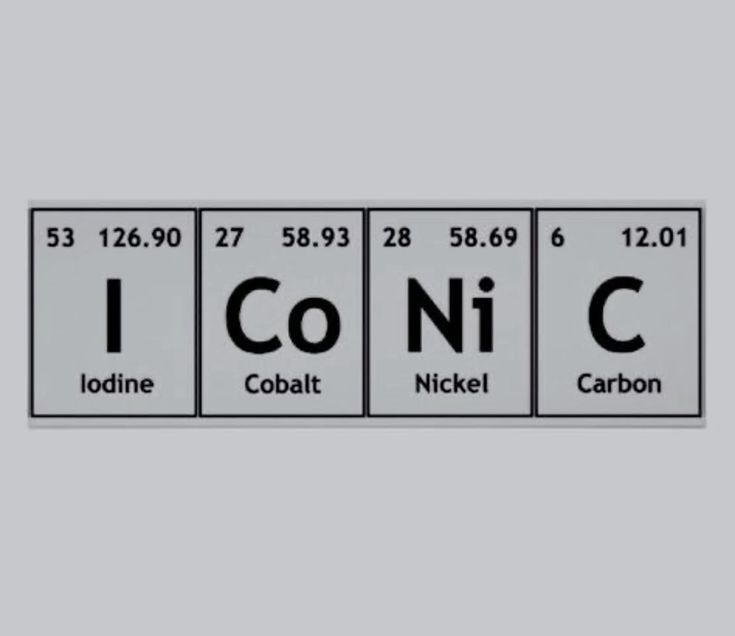
We treat the word “iconic” like a casual compliment, but true iconicity isn’t an accident. It’s a precise, elemental composition. If you look at the periodic table of cultural impact, an icon isn’t born from a single trait; it is forged through a specific, volatile mix of elements that lock together to create something permanent.
To build an icon, you need the perfect scientific formula. Let’s break down the chemistry:
In chemistry, iodine is used to test for the presence of deeply hidden starches, turning a vivid, undeniable deep blue. In the anatomy of an icon, Iodine is the visibility. An icon cannot exist in the shadows; they possess an arresting visual signature that immediately disrupts the landscape. Think of a silhouette so distinct that if you drew it in a single black line against a gray wall, the entire world would still recognize it. It’s the instant recognition, the sharp focus, the refusal to blend into the background noise of trends.
Cobalt creates the most intense, breathtaking blues in art history—pigments that have survived inside ancient tombs and on stained glass windows for centuries. This is the emotional and psychological depth of an icon. An icon isn’t shallow or fleeting; they carry a moody, resonant depth that people can project their own dreams, rebellion, or desires onto. Like cobalt, their impact doesn’t fade with exposure to the elements of time. They possess an aura that feels both incredibly rare and infinitely deep.
Nickel is the element used to coat other metals to prevent corrosion. It’s tough, magnetic, and resists the wear and tear of the world. In our formula, Nickel is absolute resilience. You cannot become iconic by being fragile or by shifting with every passing breeze of public opinion. An icon possesses a hardened, unapologetic core. They weather the critiques, the shifting cultural tides, and the relentless passage of time, emerging completely untarnished. They are magnetic because they are unyielding.
Carbon is the basis of all organic life, but under the right amount of intense pressure, it rearranges its structure to become a diamond. This is the uncompromising foundation of an icon. An icon is formed under immense cultural pressure. They take the weight of an era, the anxieties of a generation, or the boundaries of an industry, and they compress it into something brilliantly sharp, multi-faceted, and completely unbreakable. They are the raw material of culture, refined into its most precious form.
“Trends are temporary compounds. Icons are fundamental elements.”
When you fuse these elements together—Visibility, Depth, Resilience, and Pressure—you get a substance that defies the natural laws of decay. It ceases to be just a person, a garment, or a moment. It becomes a cultural milestone.
An icon doesn’t ask for permission to be remembered; its very chemistry makes it impossible to forget.
@signedpaula
Leave a Reply